
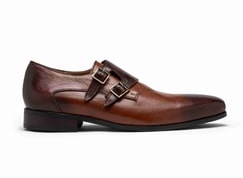
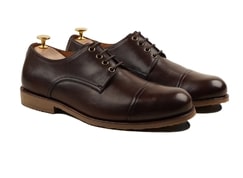
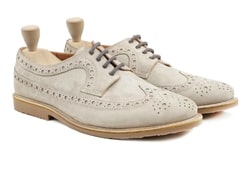
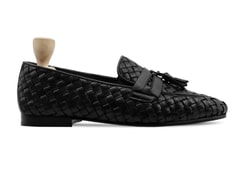
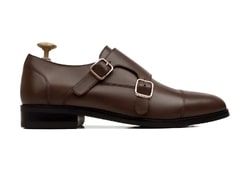
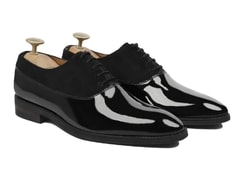
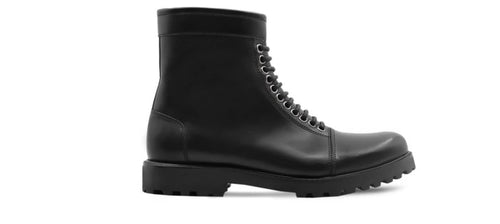


Goodyear welted leather shoes are built using a construction method where a strip of leather (the welt) is stitched around the perimeter of the upper, and the sole is then stitched to that welt rather than glued directly to the shoe. It's one of the oldest and most respected ways to build a formal shoe, and honestly, it's also one of the most commonly misused terms in shoe marketing — plenty of listings use "Goodyear welted" loosely without the shoe actually being built that way. Here's what the construction actually involves, and how to tell if a pair genuinely qualifies.
What Makes It "Goodyear Welted" Specifically
The process is named after the Goodyear welt machine, patented in the 1870s, which made this construction commercially viable at scale for the first time. The method itself involves several distinct layers. A welt (a narrow strip of leather) is stitched to both the upper and the insole. The sole is then stitched separately to that welt, not directly to the upper. A cavity between the insole and outsole is typically filled with cork or a similar material, which molds to your foot over time. And this two-stage stitching creates a shoe that can genuinely be resoled repeatedly, since a cobbler can remove and replace the outsole without disturbing the stitching that holds the upper together.
This is different from Blake stitching (a single line of stitching through insole, upper, and sole together) and very different from cemented (glued) construction, which can't be resoled at all in most cases.

Why It Costs More Than Other Construction Methods
Goodyear welting is genuinely more labor- and material-intensive than the alternatives. There are more components — the welt itself, the cork filler, and the two separate stitching processes all add material and labor cost compared to a single-stitch or glued shoe. It requires skilled labor, since properly executing a Goodyear welt takes real expertise; a poorly done welt can fail at the stitching or let water in. And the production time is genuinely longer, since the multi-stage process simply takes more time than cementing a sole on.
The payoff for that added cost is a shoe built to last years, sometimes decades, through multiple resoles — genuinely different economics than a shoe designed to be replaced.
How to Verify a Shoe Is Actually Goodyear Welted
Since the term gets used loosely, a few things are worth checking yourself. Look at the sole edge — a genuine Goodyear welt shows a visible strip of leather running around the perimeter where the upper meets the sole, slightly protruding rather than sitting flush. Check for two rows of visible stitching near the edge of the sole — one where the welt attaches to the upper, another where the sole attaches to the welt. And if the listing doesn't specify, just ask directly. A seller who genuinely uses Goodyear welt construction will usually be specific about it, since it's a meaningful selling point, not something to gloss over.
What This Construction Means for Wear and Care
Water resistance. The welt and cork filling create a genuine barrier against moisture reaching your foot, better than cemented construction, though not fully waterproof without additional treatment.
Break-in time. Goodyear welted shoes are typically stiffer out of the box than glued alternatives, since the layered construction takes longer to soften. Expect a real break-in period rather than immediate comfort.
Long-term cost. While the upfront price is higher, the ability to resole repeatedly — often for a fraction of the cost of a new pair — makes the total cost of ownership lower over years of wear compared to replacing cemented shoes every season or two.
When Goodyear Welt Isn't Necessary
I don't think every shoe needs this level of construction, honestly. For occasional wear, warm-weather styles, or budget-conscious purchases, a well-made Blake-stitched or quality cemented shoe can still serve well. Goodyear welt construction earns its price specifically for shoes you plan to wear regularly for years — daily business shoes, primary dress boots, anything you're building a long-term wardrobe around.
The Bottom Line
Goodyear welted construction is a genuine, verifiable feature — not just marketing language — when it's actually present. Check the sole edge and stitching before trusting the label, and treat it as an investment in a shoe meant to be resoled and worn for years, not a season.
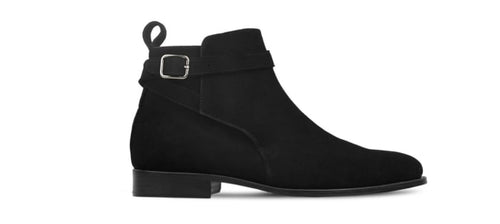
Our ankle boots and lace-up oxfords are built with genuine leather and durable construction designed to last well beyond a single season.
See a featured pair: Black Leather Jodhpur Boots for Men.