


Goodyear welt vs Blake stitch comes down to this: Goodyear welt construction generally lasts longer and resoles better, but Blake stitch offers a slimmer fit and faster break-in — the right answer genuinely depends on what you need from the shoe, not which method is objectively "better." I want to walk through exactly what separates the two, because most buying guides gloss over the actual mechanics, and the mechanics are what determine which one is right for you.
What Is Goodyear Welt Construction?
Goodyear welting is a method where a strip of leather, called the welt, is stitched around the perimeter of the upper, and the sole is then stitched to that welt rather than directly to the shoe itself. This creates two separate layers of stitching between your foot and the ground, with a cavity in between typically filled with cork or a similar material.
What this actually means in practice: the sole can be fully replaced multiple times without touching the upper. The welt acts as a barrier that helps keep moisture out. The cork filling molds to your foot over time, creating a genuinely more personalized fit the longer you wear it. And the shoe is generally stiffer at first, taking longer to break in than you might expect.
This is the construction associated with the most traditional shoemaking heritage — built to be resoled for decades, not replaced every few years. I go into more detail on exactly how to verify this construction before buying in our full Goodyear welt buying guide.
What Is Blake Stitch Construction?
Blake stitching is a more direct method: a single line of stitching runs through the insole, the upper, and the outsole all at once, visible as a stitch line on the inside of the shoe. There's no welt strip involved at all.
In practice, this gives the shoe a slimmer, lower-profile silhouette. It's generally more flexible and comfortable faster, with noticeably less break-in time. Resoling is possible, but it's a more delicate process — a skilled cobbler needs to unpick the original stitch line carefully without damaging the upper underneath.
Blake-stitched shoes are especially common in Italian shoemaking traditions, prized for a closer, more elegant fit than the sometimes bulkier profile of a Goodyear welt.
So Which One Actually Lasts Longer?
If you're measuring by resole-ability and long-term durability under heavy, unpredictable use, Goodyear welt has the real edge. It's more forgiving of repeated resoling, more water-resistant, and genuinely better suited to shoes that see rough daily wear — work boots, everyday dress shoes worn through variable weather, or anything you plan to keep for a decade or more.
If you're measuring by comfort, fit, and how the shoe wears day to day, Blake stitch often wins. It breaks in faster, sits closer to the foot, and looks sleeker under trousers — which is exactly why it's the default choice for a lot of Italian formal footwear.
Neither construction is objectively better. They're built around different priorities, and the right one depends on how you'll actually wear the shoe.
How to Tell Which Construction a Shoe Actually Uses
Check the sole edge. Goodyear welt shoes usually show a visible welt strip running around the edge of the sole, slightly protruding from the upper rather than sitting flush.
Check inside the shoe. Blake stitching is visible as a stitch line directly on the insole. Goodyear welt insoles are typically smooth, with no visible stitching on top.
Flex it. Blake-stitched shoes tend to be noticeably more flexible right out of the box, since there's no welt or cork layer adding stiffness.
Caring for Either Construction
Use shoe trees after every wear to help the leather hold its shape. Rotate between at least two pairs so the leather has real time to dry between wears. Condition the leather every few months to prevent cracking. And find a trusted cobbler who can resole before the sole wears through completely — waiting too long can damage the upper in ways that are much harder to fix.
Frequently Asked Questions
Is Goodyear welt always better than Blake stitch?
Not necessarily — it depends on your priorities. Goodyear welt wins on durability and resoling; Blake stitch wins on fit and comfort. Our guide on full-grain vs. suede leather covers a related material comparison if you're weighing multiple factors at once.
Can Blake-stitched shoes be resoled?
Yes, but it's a more delicate process than resoling a Goodyear welted shoe, requiring a skilled cobbler to carefully unpick the original stitching without damaging the upper.
Which construction is more common in dress shoes?
Both are common, but Blake stitch tends to dominate Italian-style dress shoes, while Goodyear welt is more associated with British and American traditional shoemaking.
Do all quality shoes use one of these two methods?
No — cemented (glued) construction exists too, but it generally can't be resoled the way either stitched method can, making it the least durable option long-term regardless of the leather quality used.
Looking for a pair built with proper construction? Browse our Ankle Boots collection or Lace Up Oxford collection — every pair is built with genuine leather and traditional stitching methods designed to last.
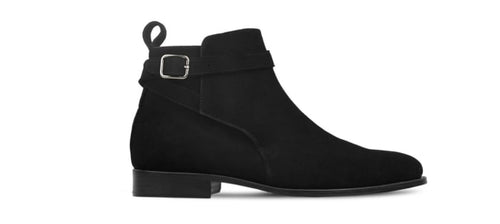
See a featured pair: Brown Patina Leather Jodhpur Boots for Men.