
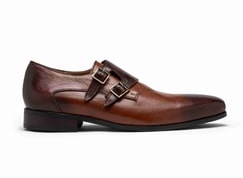
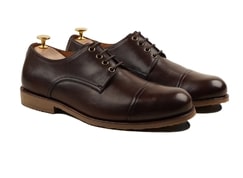
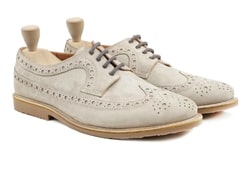
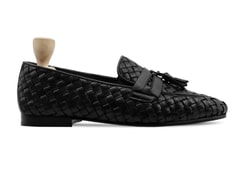


The right wedding shoes for a groom match the suit color, get broken in at least 4-6 weeks before the wedding, and prioritize comfort for a full day on your feet — get those three things right and the shoe question is genuinely solved. With everything else that goes into planning a wedding, shoes are often the last thing decided, sometimes grabbed at the last minute without much thought. That's a mistake worth avoiding: your shoes are in nearly every formal photo taken that day, and the wrong pair, or a pair that's never been broken in, can be uncomfortable through hours of standing, dancing, and posing.
Start With Your Suit Color
The suit dictates the shoe far more than personal preference does.
- Black or charcoal suit: Black oxford or black double monk strap — this is the safest, most classically correct pairing
- Navy suit: Dark brown or oxblood oxford works beautifully, black also works but reads slightly less warm
- Grey suit: Brown, tan, or black all work depending on the shade of grey — lighter greys pair well with brown, darker charcoal-greys lean toward black. Our full pairing guide for light grey suits and brown shoes covers this specific combination in detail
- Tan or lighter suit (summer/outdoor wedding): Brown or tan shoes, avoid black entirely as it reads too harsh against lighter fabric

Choose the Right Shoe Style
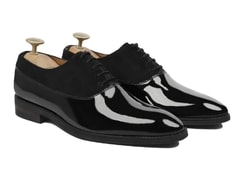
Oxford (captoe or wholecut): The most formal, safest choice for any wedding. If you're unsure what to pick, a black or dark brown captoe oxford is nearly impossible to get wrong. Our captoe oxford guide covers what to look for in construction quality.
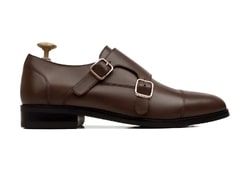
Double or triple monk strap: A strong choice if you want something with more presence than a plain oxford, without sacrificing formality. Works especially well for a groom who wants to stand out slightly from the groomsmen in matching oxfords. See our double monk strap guide.
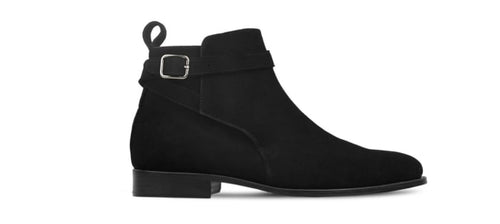
Chelsea boots: A modern alternative to traditional lace-ups, especially for a fall or winter wedding, or a more relaxed/rustic venue. Works best with a slightly less formal suit rather than full black-tie.
Brogue/wingtip oxford: A good middle ground — formal enough for the ceremony, with enough detail to photograph well and feel distinct from a plain shoe.
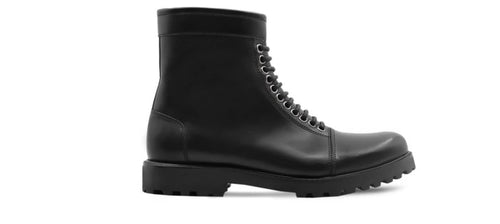
Avoid for weddings: sneakers dressed up as formal shoes, anything overly casual like loafers with no structure, and anything you haven't worn before the day itself.
Buy Early Enough to Break Them In
This is the detail most grooms get wrong. New leather shoes need time to soften and mold to your feet — showing up to a full day of standing and dancing in stiff, unworn shoes is a recipe for blisters and visible discomfort in photos. Our full guide to breaking in leather shoes properly covers exactly how to do this without damaging the leather.
- Order at least 4-6 weeks before the wedding, ideally longer if the shoes are handmade or made-to-order
- Wear them around the house for short periods multiple times before the big day
- Break in a full day before the wedding at least once if possible — a rehearsal dinner is a good opportunity to test them under real conditions
Comfort Considerations for a Long Day
Weddings involve far more time on your feet than a typical formal event.
- Cushioned insoles matter more here than for a one-hour business meeting
- Slightly more room than usual can help if you'll be standing for 6+ hours — overly tight shoes that felt fine for a 20-minute fitting can become genuinely painful by hour four
- Consider bringing a backup pair of comfortable shoes for the reception if dancing is involved, especially for grooms not used to wearing formal shoes for extended periods
Coordinating With Your Wedding Party
If groomsmen are also wearing formal shoes, decide whether you want to match exactly or stand slightly apart:
- Matching: Everyone in the same black oxford creates a clean, unified look in photos
- Standing apart: A monk strap or slightly different shade for the groom while groomsmen wear standard oxfords is a subtle way to distinguish the groom without clashing
Neither approach is wrong — it depends on the overall formality and style of the wedding.
A Simple Timeline to Follow
- 8+ weeks before: Decide on suit color, then choose shoe style and color to match
- 6 weeks before: Order the shoes, allowing time for made-to-order or handmade production and shipping
- 4 weeks before: Start wearing them at home in short sessions
- 1-2 weeks before: Wear them for a full day at least once (rehearsal, errands, anywhere with real walking)
- Wedding day: Comfortable, broken-in, ready to be in every photo without a second thought
Frequently Asked Questions
What color shoes go with a navy wedding suit? Dark brown or oxblood is the classic pairing, though black also works if you want a more formal, uniform look with the rest of the wedding party.
How far in advance should I buy wedding shoes? At least 4-6 weeks, to allow enough time for the shoes to arrive and for you to properly break them in before the wedding day.
Should the groom's shoes match the groomsmen's? Not necessarily — matching creates a unified look, while a slightly different style or shade for the groom is a subtle, common way to distinguish him without clashing.
Are loafers appropriate for a wedding? Generally only for very casual or destination weddings — a structured oxford, monk strap, or dress boot is the safer choice for most wedding formality levels.
Browse formal wedding-ready styles in our Oxford & Wingtips and Monk Strap collections — handmade in genuine leather, built to look sharp and feel comfortable through a full day of celebration.
See a featured pair: Golden Wholecut Oxford Shoes for Men.