
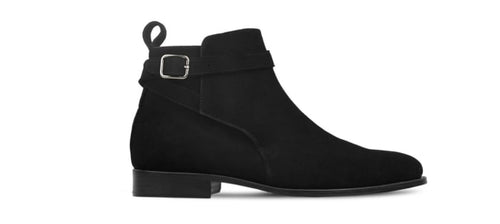


Chelsea boots for men are ankle-high boots with elastic side panels and no laces, which gives them their clean, easy-to-wear shape. Some pairs are polished enough for tailored trousers, while others are built for jeans and everyday wear. The important part is not simply finding a Chelsea boot you like — it is choosing one whose leather, shape, sole and color match the job you need it to do.
That sounds obvious, but Chelsea boots can look surprisingly different once you put them next to each other.
A slim black leather pair and a washed brown pair may share the same basic construction, yet they belong in very different wardrobes.
So before looking at details, decide one thing first.
What Job Do You Need Your Chelsea Boots to Do?
Think about the occasions where you expect to wear them most often.
Mostly office and smarter clothing? Start with smooth black or dark brown leather, a relatively clean toe and a neat profile.
Mostly chinos, jackets and smart-casual outfits? Medium or dark brown gives you more flexibility. Patina leather can also work well here because it adds character without making the boot overly casual.
Mostly jeans and everyday clothing? Washed leather, suede or a more practical rubber sole may make more sense than a highly polished dress-style boot.
You do not need one Chelsea boot to cover every possible situation. You need the first pair to cover your most common situation. That is a much easier decision.
Look at the Shape Before the Color
Color gets most of the attention when people shop for boots, but the shape often changes the appearance more.
A Chelsea boot with a narrow, elongated toe naturally looks dressier. A rounder toe and heavier-looking sole make the same basic boot feel more relaxed.
Look at the boot from the side. Does it sit close to the ankle? Does the toe look balanced rather than extremely long? Does the sole match the overall profile of the upper?
These small proportions decide whether the boot looks refined or rugged before the leather color even enters the conversation.
This matters especially with Chelsea boots because there are no laces or buckles to break up the silhouette. The shape itself does most of the visual work.
For a real example, Marcello Sarto's Black Chelsea Boots for Men have the simple, smooth profile that makes this type of boot easy to dress up.

The Fit Is Different From a Lace-Up Boot
This is one area where buying Chelsea boots deserves extra attention.
With a lace-up boot, you can tighten or loosen the upper. Chelsea boots do not give you that adjustment.
The elastic sides need to hold the foot securely without squeezing it.
A good fit should feel secure at the heel, comfortable across the instep and natural around the toes. A small amount of heel movement can happen, but your heel should not lift dramatically with every step.
The ankle opening should also sit reasonably close to your leg. If it is very loose, the boot can feel sloppy even when the length is technically correct.
Do not buy a clearly uncomfortable pair expecting the elastic or leather to solve every fit problem later.
Smooth Leather, Patina or Suede?
Instead of asking which material is “best,” think about how much formality you need.
Smooth leather
This is the safest first choice for most men.
Smooth men’s leather Chelsea boots can move easily from business-casual clothing to smarter evening outfits. Black feels sharper; brown usually feels more flexible.
If you want one pair that has to work with a large part of your wardrobe, smooth leather is difficult to go wrong with.
Patina leather
Patina gives the surface more depth.
Rather than one completely flat shade, you see darker and lighter variations across the leather. That makes the boot more noticeable without needing unusual hardware or excessive decoration.
Marcello Sarto's Brown Patina Leather Chelsea Boots are a good example of how a classic Chelsea shape can feel more individual through the finish alone.

Suede
Suede naturally looks softer and more relaxed than polished leather.
It works particularly well when your wardrobe leans toward denim, chinos, knitwear and casual tailoring.
If you already own a smooth leather Chelsea boot and are wondering what a useful second pair might look like, the existing guide to dark brown suede Chelsea boots goes much deeper into that choice.
Your Sole Should Match Your Real Life
People often examine the leather carefully and then barely look at the bottom of the boot.
That is a mistake.
The sole changes both the appearance and the everyday usefulness of a Chelsea boot.
A slimmer sole generally gives a cleaner, dressier appearance. A rubber sole can offer a more practical feel for regular walking and can visually push the boot toward casual wear.
Neither one is automatically better.
If your Chelsea boots will mostly move between the car, office and restaurant, your priorities may be different from someone who walks a lot every day.
This is why buying for your actual routine matters more than buying for a product photograph.

Use Color to Expand Your Wardrobe, Not Complicate It
Once the shape, fit and material make sense, color becomes much easier.
| If your wardrobe is mostly… | Start with… |
|---|---|
| Black, charcoal and dark tailoring | Black |
| Navy, beige, denim and earth tones | Brown |
| Business-casual with some personality | Oxblood or burgundy |
| Casual neutrals and denim | Suede brown |
| Already covered by black and brown | Navy, patina or another distinctive finish |
Brown is often the easiest first pair because it works across a wide range of casual and smart-casual clothing.
Black makes more sense if your wardrobe is consistently dark or formal.
Oxblood is interesting because it gives you color without becoming difficult to wear. It sits between brown and burgundy visually and can still feel refined.
Do You Need Brogue Details?
Not necessarily.
A plain Chelsea boot has one major advantage: simplicity.
The clean upper allows the leather, shape and color to do the work.
Brogue detailing adds visual texture and can make the boot feel more distinctive, but it also makes the design busier.
If you want the pair to work with smarter clothing, a plain smooth upper is usually the easiest choice.
If you already own simple boots and want something with more personality, brogue or wingtip detailing can make sense as a later addition.
Neither option says anything by itself about how well the boot is made.
For a deeper look at leather and construction rather than style details, see the Marcello Sarto guide to premium Chelsea boots.
A Quick Test Before You Buy
Instead of asking ten separate questions, try this test.
Imagine three outfits you already own — not outfits you plan to buy later, but clothes currently in your wardrobe.
Can you immediately picture the Chelsea boots with all three?
Then think about your normal week. Would you realistically wear them at least once or twice?
Finally, look at another pair you are considering. Does the second pair solve a different wardrobe need, or is it essentially the same boot in another shade?
These questions are surprisingly useful because they stop the purchase from becoming purely about how attractive the boot looks by itself.
Shoes are part of an outfit, not display pieces.
What About Styling Them?
Once you have chosen the right pair, styling becomes the easier part.
Chelsea boots can work with jeans, chinos and tailored trousers, but trouser width, length and color matching all change the final result.
Rather than repeating that entire subject here, the existing Chelsea boots styling guide covers exactly how to wear them across casual, business-casual and smarter situations.
That keeps this article focused on making the right buying decision.
One Chelsea Boot Is Not Supposed to Do Everything
A common mistake is searching for a Chelsea boot that is simultaneously formal, rugged, lightweight, weather-friendly, bold and suitable for every outfit.
That pair probably does not exist.
A smarter approach is to start with the pair that solves the biggest gap in your wardrobe.
For many men that means smooth brown or black leather.
Later, you can add suede, patina, brogue details or a more practical everyday sole without simply buying the same boot again.
If you want to browse the different shapes and finishes available at Marcello Sarto, the men’s ankle boots collection includes Chelsea and other ankle-height boot styles.
Choose the Pair That Fits Your Life
The right Chelsea boots for men should feel like an easy part of your wardrobe rather than something you need to build an outfit around every time.
Start with how you dress. Then choose the shape.
Check the fit carefully because you do not have laces to compensate for it.
Pick the leather and sole according to where you actually walk and what you normally wear. Color comes after those decisions.
When those details line up, Chelsea boots become exactly what they are supposed to be: simple, useful and easy to reach for.