
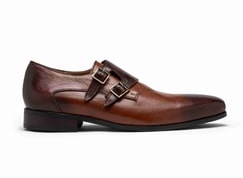
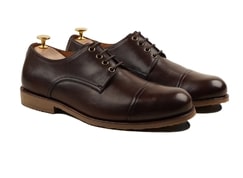
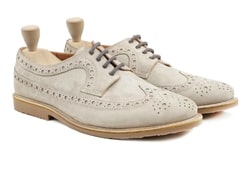
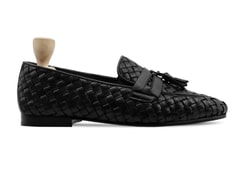


Men's dress boots occupy a genuinely useful middle ground in a wardrobe — more polished than a casual boot, more practical and versatile than a low-cut dress shoe. Whether you're building your first formal boot collection or adding to an existing one, here's everything I'd actually want you to know before buying.
What Makes a Boot a "Dress Boot"
A dress boot is defined less by a single silhouette and more by construction quality and formality level. Generally, it means genuine leather, typically smooth rather than heavily textured or rugged. Clean, minimal detailing, with the emphasis on polish and structure rather than rugged practicality. A refined sole, usually leather or a slim leather-and-rubber combination rather than a chunky work-boot tread. And a silhouette that works under tailored trousers, without excessive bulk.

The Main Types of Dress Boots
Chelsea boots — defined by elastic side panels and no lacing at all, the cleanest and most versatile silhouette in this category. For a full breakdown of how to style them, see our complete Chelsea boots guide.
Chukka boots — minimal two- or three-eyelet lacing, rounded toe, understated by design. Works especially well under a suit in less formal business settings — our guide to wearing chukka boots with a suit covers this pairing in detail.
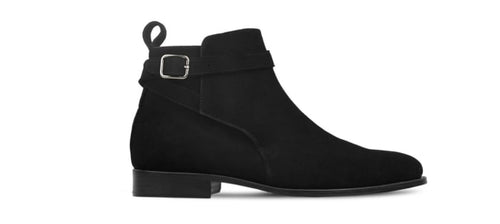
Jodhpur boots — a strap-and-buckle closure at the ankle instead of laces, giving a slightly more formal, structured look than a chukka while remaining lace-free.
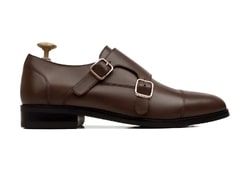
Cap-toe and wingtip dress boots — bringing oxford-style detailing (a captoe seam or full brogue perforation) up onto a boot silhouette, honestly the most formal option in this category and closest in spirit to a traditional dress shoe.
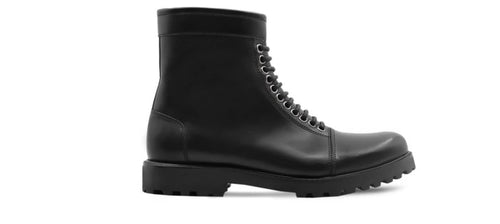
If you prefer a classic laced closure with more control over fit, our men’s lace up boots guide explains how to choose the right leather, color and shape for both dressier and everyday wear.
Chelsea vs Lace-Up Dress Boots: Which Is More Versatile?
The choice is less about which style is universally better and more about how you dress. Chelsea boots have the cleanest upper because there are no eyelets or laces, so they disappear neatly under tailored trousers and move easily between business-casual and smart-casual outfits. They are also quick to put on, but their fit depends heavily on the last, elastic panels and ankle shape because there is no lacing to tighten.
Lace-up dress boots give you more control over instep and ankle fit. A sleek cap-toe or wingtip lace-up can feel closer to a traditional dress shoe, especially in smooth leather with a slim sole. They are a strong choice if your foot needs more adjustment than a Chelsea boot allows. Jodhpur boots sit between the two: visually clean like a Chelsea, but with a buckle that adds a more distinctive detail.
What I'd Actually Look For in Construction Quality
Genuine full-grain leather, specified clearly rather than vague "leather" language — this determines both how the boot looks initially and how well it ages.
Stitched sole construction, ideally Goodyear welt or Blake stitch rather than glued assembly. Our guide to verifying genuine Goodyear welt construction breaks down exactly what to check.
Clean, even stitching throughout, particularly around any brogue detailing or the elastic gussets on Chelsea styles, since these are the points most likely to show poor construction first.
A properly fitted last, since dress boots — especially Chelsea and jodhpur styles — rely on a closer fit through the ankle than a laced shoe, where laces can compensate for width.
Color and Finish Guide
Black — the most formal, works with business suits and most conservative settings.
Brown or dark brown — more versatile for business-casual, pairs with a wider range of trouser colors.
If those are your two finalists, our black vs brown boots comparison breaks down versatility, formality, jeans, suits, and which color makes the better first pair.
Oxblood or burgundy — a genuine style statement that stays business-appropriate, offering more personality than standard black or brown.
Suede — shifts any of these boot styles toward smart-casual rather than strict formal wear; a good second pair once you own a smooth leather option.
Hand-painted patina finishes — layered, hand-applied color rather than flat-dyed, giving genuine tonal depth and individual character.
Where Dress Boots Sit on the Formal-to-Casual Spectrum
The easiest way to judge a pair is to look at four things together: toe shape, leather finish, sole thickness and decoration. A sleek black Chelsea boot with a narrow profile and slim sole sits close to a traditional dress shoe. A dark brown cap-toe or jodhpur boot is still polished but slightly more relaxed. A suede chukka with a softer toe and rubber sole moves further toward smart-casual territory.
If you want one boot that can move from tailored trousers at work to jeans on the weekend, avoid extremes. Skip very chunky soles, heavy contrast stitching and overly rugged hardware, but also avoid a silhouette so formal that it only works with suiting. That middle ground is where a refined dress-casual boot becomes most useful.
How Toe Shape and the Last Affect Formality
The last is the form a shoe or boot is built around, and it controls much of the finished shape. A more elongated or gently almond-shaped last usually reads dressier because it creates a cleaner line under tailored trousers. A very broad, bulbous or heavily rounded toe tends to look more casual or rugged.
That does not mean a dress boot needs to be sharply pointed. In fact, an exaggerated point can be harder to style and may date quickly. For most wardrobes, a balanced almond or refined round toe is the easiest choice: enough shape to look polished, but enough room to remain wearable. Also look at toe spring—the amount the front lifts from the floor. Minimal, controlled toe spring generally looks more formal than a visibly upturned rugged boot.
Dress Boot vs Casual Boot: A Quick Check
If you're unsure where a boot sits, check the upper, toe, sole and hardware together. A dress boot usually has smoother leather or fine suede, a cleaner toe shape, a slimmer sole, restrained stitching and minimal hardware. A casual or rugged boot is more likely to use thicker leather, heavy grain, contrast stitching, large eyelets, chunky rubber tread or a broader toe.
The final test is simple: can the boot sit comfortably under tailored trousers without the shaft, sole or toe looking bulky? If yes, it is likely on the dressier side. If it looks best only with denim, workwear or heavy outerwear, it is probably closer to a casual or utility boot.
Smooth Leather vs Suede: Which Should You Buy?
Smooth leather is the better first choice if you need maximum versatility. It works more naturally with office trousers, suits, business-casual separates and evening outfits, and it can usually be polished back to a sharper finish.
Suede is softer visually and easier with denim, chinos and textured tailoring. It is especially strong for smart-casual wardrobes, but it is less formal and needs more weather protection. If this is your first pair, start with smooth black or dark brown leather; add suede when you want a second, more relaxed option.
How the Sole Changes the Formality
The sole is one of the fastest ways to tell whether a boot will look dressy or casual. A leather sole or very slim rubber sole keeps the profile clean enough for tailoring. A medium rubber sole adds practicality without making the boot look heavy. Deep lugs, thick welts and oversized tread push the boot firmly into rugged territory.
For a true work-to-weekend pair, I would choose a slim leather-and-rubber or low-profile rubber sole. It gives better traction than pure leather while still fitting comfortably under tailored trousers.
Weather, Season and Leather Care
Smooth leather is generally easier to maintain through changeable weather than suede, but a refined dress boot should not automatically be treated as waterproof. Before wet-weather wear, use a protector that is appropriate for the specific leather or suede finish, and avoid soaking the boot whenever possible.
If leather gets wet, remove surface moisture and let the boots dry naturally away from direct heaters. Shoe trees can help the upper keep its shape while resting. Smooth leather benefits from periodic conditioning and polishing; suede should usually be cleaned with a suede brush and suitable protector rather than conventional leather polish. Rotating pairs instead of wearing the same boots every day also gives the leather time to dry and recover. For a fuller routine, see our leather care and maintenance guide.
How to Style Dress Boots by Occasion
With a business suit, smooth leather Chelsea or cap-toe boots in black or dark brown work as a genuine alternative to oxfords for most professional settings. With business-casual separates, chukka or jodhpur boots in brown or oxblood pair naturally with tailored trousers and a blazer. And for smart-casual with jeans, Chelsea boots specifically handle this pairing best, cuffed jeans showing just enough of the boot to look intentional.
Office vs Weekend: What Changes?
For the office: favor smooth leather, darker colors, cleaner toes and slimmer soles. Black, dark brown and oxblood Chelsea, cap-toe and jodhpur boots are the safest choices.
For weekends: you can move into suede, tan, lighter brown, brogue detailing and slightly softer shapes. Chukkas and relaxed Chelsea boots work particularly well with jeans, chinos, overshirts and knitwear.
The same pair can often cover both settings if the leather is refined and the sole is not too rugged. That crossover is exactly why dress boots can be more useful than owning separate formal and casual boots.
How Trousers Should Fall Over Dress Boots
With tailored trousers, the hem should usually sit cleanly over the boot with little or no break. Too much fabric stacking around the ankle hides the boot's shape and can make a polished outfit look untidy. The trouser opening also needs enough room to pass over the boot shaft instead of catching on it.
For Chelsea and Jodhpur boots, the shaft should normally remain mostly hidden under tailored trousers when standing. With jeans, a small cuff can work well if you want to show more of the boot, but avoid a large roll or excessive stacking. The goal is to keep the line from trouser to boot deliberate rather than bulky.
How Dress Boots Should Fit
A good dress boot should feel secure through the heel and ankle without pinching the instep. Your toes should have enough room to lie flat and move slightly, but the foot should not slide forward when you walk. Chelsea and jodhpur boots should feel especially close around the ankle because there are no laces to fine-tune the fit later.
For online orders, measure both feet and use the larger measurement, especially if you are between sizes. If you are unsure, our shoe size guide for buying online covers the measurement steps in detail.
Which Pair Should You Buy First?
If you only want one pair, I would start with a dark brown smooth-leather Chelsea boot. It is easier than black with denim and chinos, still polished enough for most business-casual settings, and clean enough to wear with tailored trousers.
If your wardrobe is mostly black, charcoal and navy tailoring, choose black instead. If your wardrobe is mostly denim, earthy chinos and textured jackets, a dark brown chukka is another strong first pair.
When you're ready to compare refined options built specifically for this middle ground, shop our men’s casual dress boots collection for Chelsea, Chukka, Jodhpur, wingtip, cap-toe and lace-up styles in leather and suede.
How Many Pairs You Actually Need
A reasonable starting point I'd suggest: one black Chelsea or cap-toe boot for business and formal settings, and one brown or oxblood chukka or jodhpur boot for business-casual and smart-casual wear. From there, suede options and bolder colors fill in variety as your wardrobe grows.
Frequently Asked Questions
Are dress boots appropriate for the office?
Yes, in the vast majority of business and business-casual settings — particularly Chelsea and cap-toe styles in black or dark brown. The most conservative, formal environments may still prefer a traditional low-cut oxford.
Can dress boots be worn with a suit?
Absolutely — smooth leather Chelsea or cap-toe boots specifically work well as an oxford alternative under tailored trousers.
Can men wear dress boots with jeans?
Yes. Chelsea and chukka boots are especially easy with straight or slim jeans. Keep the boot shape refined and avoid stacking too much denim over the shaft.
Are suede dress boots too casual for work?
Not always. Dark brown or navy suede can work in business-casual offices, especially with chinos, wool trousers or an unstructured blazer. Smooth leather is still the safer option for more formal workplaces.
Should dress boots have a pointed or round toe?
Neither extreme is necessary. A gently almond-shaped or refined round toe is usually the most versatile because it looks polished with tailoring without appearing overly sharp or bulky.
What trouser break works best with dress boots?
A no-break or slight-break hem usually works best. It keeps the trouser line clean and avoids excess fabric stacking around the ankle or catching on the boot shaft.
Can dress boots be worn in rain?
Light rain may be manageable with appropriate leather or suede protection, but dress boots should not be assumed to be waterproof unless the specific construction says so. Let wet boots dry naturally and condition or brush them as appropriate afterward.
What's the difference between a dress boot and a work boot?
Dress boots prioritize refined leather, minimal detailing, and a slim silhouette built for formal and business wear. Work boots prioritize rugged durability, thicker soles, and reinforced construction for physical labor — the two serve genuinely different purposes.
How long should a well-made pair of dress boots last?
With proper care and periodic resoling, particularly Goodyear welted construction, a genuinely well-made pair can last many years — often significantly longer than glued, mass-produced alternatives.
For the most versatile work-to-weekend options, browse our Men’s Casual Dress Boots collection. For the broader boot range, see our Ankle Boots collection.
See a featured pair: Men’s Brown Suede Dress Boots.