
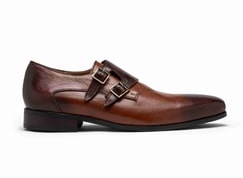
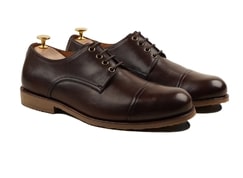
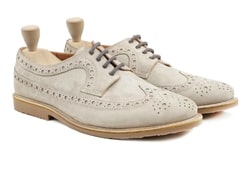
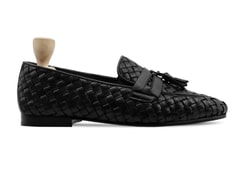


Choosing brown dress shoes comes down to shade, silhouette, construction and how you plan to wear them. This guide explains the differences between light, medium and dark brown, compares Oxford, Derby and monk strap styles, and shows how to pair brown leather shoes with navy, grey, tan and business-casual outfits.
Why Brown Is Such a Versatile Dress Shoe Color
Black is the safer, more conservative default, but brown usually works across a wider range of everyday outfits. Brown pairs naturally with navy, grey, tan and olive, which makes it especially useful for business, weddings and smart-casual dressing. If you are building a dress-shoe wardrobe from scratch, a well-chosen medium or dark brown pair can cover a surprisingly broad range of situations.
How to Choose the Right Shade of Brown
Light tan or camel — the most relaxed end of the spectrum and particularly useful in warmer months or with lighter trousers.
Medium brown — one of the most versatile choices, moving comfortably between business-casual and smart-casual outfits.
Dark brown — closest to black in formality while keeping the warmer character of brown leather.
Oxblood or burgundy-brown — a more distinctive option that can still work in business settings. Our burgundy dress shoes guide covers this color family in more detail.

Which Brown Dress Shoe Style Fits Your Needs?
Brown Derby shoes use open lacing, which gives them a slightly more relaxed character and makes them easy to wear from business to smart-casual settings. See our brown Derby guide for a deeper comparison.
Brown Oxford shoes use a cleaner closed-lacing structure and are usually the strongest choice when you want a more formal appearance.
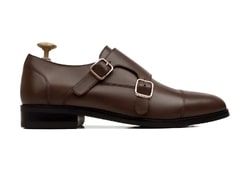
Brown monk straps replace laces with one or two buckles, adding visual interest while remaining polished enough for tailored outfits.
Brown loafers sit on the more relaxed side of dress footwear and work especially well with tailored trousers, chinos and less formal suiting.
What to Look for in Leather and Construction
Leather quality matters because brown finishes tend to show natural grain, tonal variation and patina more clearly than very dark footwear. Look for a consistent finish, clean edges and leather that suits the level of formality you need.
Sole construction affects durability, flexibility and whether a shoe can be resoled. Stitched constructions such as Goodyear welt or Blake stitch are common quality signals, but the overall build and finish should be considered together.
Color consistency and finishing are especially visible on brown shoes. Patina can be intentionally varied, while accidental patchiness or uneven dyeing can make a pair look less refined.
How to Pair Brown Dress Shoes With Outfits
Navy suits: medium and dark brown are reliable choices, with darker shades creating the more formal result.
Grey suits: dark and medium brown both work well; the deeper the grey, the more polished a dark brown shoe tends to look.
Tan or beige trousers: medium brown, cognac and darker contrasting brown shades can all work depending on how much contrast you want.
Business-casual outfits: brown Derby shoes, monk straps and loafers pair naturally with chinos, tailored trousers and a blazer.
For strict black-tie or highly conservative dress codes, black footwear remains the safer choice. Brown is strongest when the dress code allows some warmth and flexibility.
Frequently Asked Questions
Are brown dress shoes appropriate for business meetings?
Yes. Dark and medium brown are appropriate for most modern business and business-casual settings, provided the overall outfit is suitably formal.
Can brown dress shoes be worn with a black suit?
Usually black shoes create the cleaner, more formal combination with a black suit. Brown tends to pair more naturally with navy, grey, tan and earth-toned tailoring.
What is the most versatile shade of brown to buy first?
Medium to dark brown usually provides the best balance between formality and everyday versatility.
Should I choose Oxford, Derby or monk strap shoes?
Choose Oxfords for the most formal look, Derbies for broader everyday versatility, and monk straps when you want a more distinctive buckle-based style.
Ready to shop? Browse our curated men's brown dress shoes collection, or compare style-specific options in our Derby shoes, brown Oxford shoes, and monk strap shoes.
See a featured example: Tan Brown Patina Leather Derby Shoes for Men.