
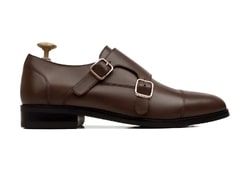
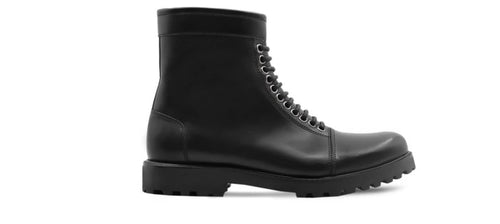
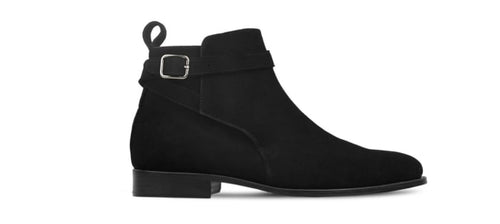


Men's leather chukka boots take the style's understated, minimal design and give it a more polished, business-appropriate edge than the suede version most people picture first. If you want the chukka's easy versatility but need something that reads a bit more formal, leather is the finish to look for. Here's what I'd actually check before buying.
Leather vs. Suede Chukka Boots
The chukka's silhouette — minimal two- or three-eyelet lacing, rounded toe, no cap or brogue detailing — stays identical regardless of finish. What changes is formality and use case. If you're deciding between the two, our suede chukka boots guide covers that softer, more casual option in detail. Smooth leather, covered here, shifts the same silhouette toward business-casual and even some formal settings.
Leather advantages: takes a polish, more water-resistant, reads as more business-appropriate, generally more durable against everyday scuffing.
Suede advantages: softer texture, faster break-in, leans more casual and relaxed.

What I'd Actually Look For in Construction Quality
Genuine full-grain leather, clearly specified — this is what allows the boot to take a proper polish and develop a rich patina with wear over time.
Stitched sole construction, ideally Goodyear welt or Blake stitch rather than glued, for durability and resoling ability. Our Goodyear welt buying guide covers exactly how to verify genuine welted construction.
Clean, minimal eyelet stitching — since the chukka's whole design relies on simplicity, any sloppiness in this small amount of detail stands out more than it would on a more decorated shoe.
A properly fitted last, snug through the ankle without being restrictive, since the chukka's low-cut design relies more on a close fit than a taller boot would.
Color Options
Black leather — the most formal option, works with business-casual suits and darker trouser colors.
Brown or dark brown leather — the most versatile, pairs with a wide range of trouser colors from navy to grey to tan.
If black and brown are your two finalists, our black or brown boots guide compares versatility across denim, office wear, tailoring, and darker wardrobes.
Oxblood or burgundy leather — a genuine style statement while staying business-appropriate.
Patina-finished leather — hand-painted in layers for tonal depth a flat dye can't replicate.
How to Style Leather Chukka Boots
With a suit is honestly where leather genuinely outperforms suede; smooth leather chukkas can work under tailored trousers for business-casual settings in a way suede sometimes can't. For the full tailoring breakdown, see our chukka boots with a suit guide, including the best leather, sole, suit-color, and trouser combinations. With chinos and a blazer, it's a reliable, easy pairing across brown or black leather chukkas. And with dark jeans, smooth leather chukkas, cuffed slightly, work for smart-casual settings that still want some polish.
Caring for Leather Chukka Boots
Condition regularly to keep the leather supple and prevent drying or cracking. Polish periodically for shine and light water protection — this is genuinely one of leather's real advantages over suede, which can't be polished the same way. Use shoe trees between wears to help the boot hold its shape. And clean with a soft cloth and mild soap when needed, rather than harsh cleaning products.
Frequently Asked Questions
Are leather chukka boots appropriate for the office?
Yes, particularly black or dark brown, in most business-casual settings — they read as more polished than suede chukkas.
Can leather chukka boots be worn with a suit?
Yes, smooth leather specifically handles this pairing better than suede, working as a business-casual alternative to a full oxford.
Do leather chukka boots need to be broken in?
Generally less than a full dress oxford, though genuine leather still benefits from a few short wears before extended use, particularly with Goodyear welted construction.
What's the difference between leather and suede chukka boots in terms of durability?
Leather is generally more resistant to water and everyday scuffing; suede requires more careful maintenance (brushing, protector spray) but can last just as long with proper care.
Browse our full range of handmade leather chukka boots in our Ankle Boots collection — smooth leather and patina finishes built to last.
See a featured pair: Brown Leather Chukka Boots for Men.