


Winter boots need taller shaft coverage, a sturdier sole, and full-grain or treated leather that resists salt and moisture — a boot that just looks tall and rugged isn't automatically built for real cold-weather conditions. Here's what I'd actually look for, and which styles from our range genuinely hold up once the weather turns.
What Makes a Boot Actually Winter-Ready
A few genuine construction factors separate a real cold-weather boot from one that just happens to look the part.
Taller shaft coverage. Boots that sit higher on the leg keep out more slush and cold air than a low-cut chukka. Not essential for mild winters, but worth prioritizing if you're dealing with real snow.
Sturdier sole construction. A thin dress-shoe sole loses grip fast on wet or icy pavement. Goodyear welted boots in particular tend to have a chunkier, more durable base than Blake-stitched dress shoes — our Goodyear welt guide covers how to verify this construction before buying.

Full-grain or treated leather. Full-grain naturally resists water better than suede, and holds up to repeated salt exposure without showing damage as fast. If you love suede, a protector spray becomes non-negotiable for winter wear.
A snugger, more secure fit. Loose boots let cold air in around the ankle. A boot that fits close to the leg without being tight genuinely retains more warmth through the day.
Best Boot Styles for Winter
Chelsea boots (smooth leather, not suede) — the elastic side panels keep out drafts better than laced boots, and smooth leather sheds water more easily than suede. A dependable daily winter option that still looks sharp under trousers for work. Our Chelsea boots guide covers styling this pairing well.
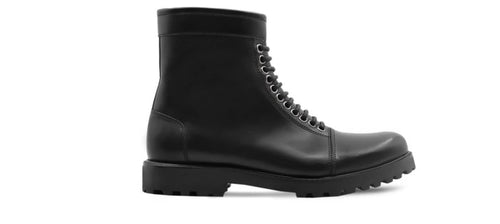
Calf-high military boots — genuinely the most weather-ready option in our range. The taller shaft and sturdier construction handle real snow and slush better than anything else on this list.
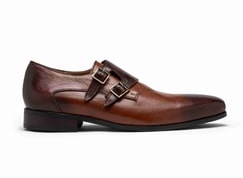
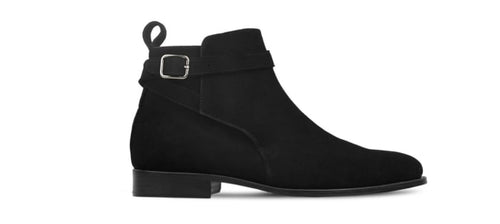
Jodhpur boots — the strap-and-buckle closure sits higher on the ankle than many styles, adding a bit more coverage. Good middle ground between a dress boot and something more rugged.
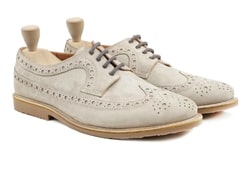
Wingtip and brogue ankle boots — the perforated detailing doesn't compromise water resistance the way people sometimes assume, since it sits on the upper rather than near the sole.
What I'd steer away from for heavy winter use: lighter suede loafers and low-cut chukkas. Not because they're poorly made, but because the construction genuinely isn't built for slush and repeated wet exposure the way a taller, full-grain boot is.
Caring for Boots Through Winter Specifically
Winter is genuinely harder on leather than any other season, mainly because road salt actively dries out and damages leather if left untreated.
Wipe down boots after any exposure to salt or slush — even a quick pass with a damp cloth prevents salt from sitting on the leather and drying it out. Condition more frequently than usual, since cold air and salt both pull moisture out of leather faster than normal wear. Let boots dry fully and naturally between wears — never force-dry with direct heat. And apply a water-repellent treatment before the season starts, not after the first time boots get soaked.
A Practical Starting Point
If you're building a winter-specific boot rotation from scratch, one pair of smooth-leather Chelsea boots and one pair of calf-high military boots covers most situations — one for business and everyday polish, one for genuinely rough weather days.
Frequently Asked Questions
Are suede boots ever okay for winter?
Yes, with a proper suede protector spray applied before the season starts — but they'll never match full-grain leather's water resistance.
How often should winter boots be conditioned?
Roughly monthly during active winter wear, more frequently than the standard routine, since salt and cold air both accelerate moisture loss.
Do Chelsea boots work well in snow?
Smooth leather Chelsea boots handle light-to-moderate snow and slush reasonably well; for heavy snow, a taller, more rugged boot with a sturdier sole is the better choice.
Browse our full range of winter-ready boots in our Ankle Boots collection — Chelsea, jodhpur, military, and diver styles built in genuine leather.
See a featured pair: Brown Leather Calf-High Military Boots for Men.