
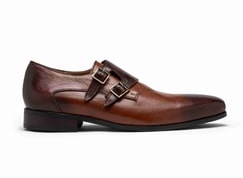
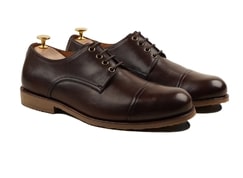
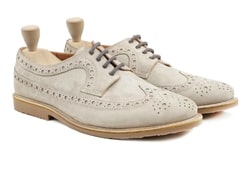
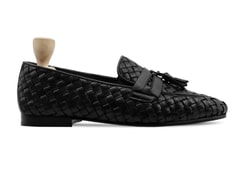


Penny loafers for men have survived decades of shifting menswear trends without ever really disappearing, and there's a simple reason why: nothing else offers the same combination of formality, ease, and versatility in a single shoe. No laces, no buckles — just slip in and go, and still look genuinely put-together. Here's everything I'd want you to know before buying a pair.
What Defines a Penny Loafer
The penny loafer's signature feature is the strap across the vamp with a diamond-shaped cutout — originally designed to hold an actual coin, giving the style its name. Beyond that detail, the construction is straightforward: a slip-on shoe with no laces or buckles, built on a moccasin or structured last depending on the specific style.
A Brief Note on Where They Came From
The penny loafer traces back to Norwegian fishermen's shoes, adapted and popularized in the US starting in the 1930s. It became a genuine American style staple — Ivy League students, businessmen, and eventually a much broader audience adopted it as one of the few shoes that works equally well in a boardroom and on a weekend. That versatility is exactly why it's remained relevant for nearly a century.

What I'd Actually Look For in Construction Quality
Genuine leather, clearly specified — full-grain leather develops a richer patina with wear and holds up significantly better over years of regular slip-on-and-off use than corrected or bonded alternatives. For more on how leather types actually compare, see our full-grain vs. suede guide.
Stitched sole construction, ideally Goodyear welt or Blake stitch rather than glued — this matters even more on a loafer than a laced shoe, since the repeated stress of sliding the foot in and out is exactly where cheap, glued construction fails first.
A properly fitted last. Because there's no lacing to adjust for width, a loafer relies entirely on a correct initial fit — too loose and it slips at the heel with every step; too tight and there's no way to loosen it the way you could with laces.
Clean, even strap stitching across the vamp, since the penny strap is the shoe's main visual detail — any sloppiness here is more noticeable than it would be on a plainer shoe.
Leather and Finish Options
Smooth leather — the most formal and versatile option, takes a polish well, works across business-casual and dressier smart-casual settings.
Suede — softer, more casual, shifts the loafer toward relaxed weekend wear rather than business use.
Patina-finished leather — hand-painted in layers rather than flat-dyed, giving genuine tonal depth that develops further with wear.
Exotic-embossed leather — alligator or crocodile-embossed finishes add texture and visual interest without the cost of genuine exotic skins.
Color Guide
Black — the most formal, works with business-casual suits and darker outfits.
Brown or tan — the most versatile for everyday wear, pairs with a wide range of casual and business-casual outfits.
Burgundy or oxblood — a genuine style statement while staying business-appropriate.
Two-tone finishes — distinctive, best suited to casual and warm-weather outfits rather than conservative business settings.
How to Style Penny Loafers
With chinos is honestly the easiest, most reliable pairing, working across nearly every loafer color. With a suit and no tie, black or dark brown penny loafers work well for business-casual settings that don't require full formal lacing. With jeans, smooth leather or suede, cuffed slightly, works for smart-casual weekend outfits. And for socks, no-show or bare ankle in warmer months, matching your trouser color the rest of the year for a clean leg line.
Penny Loafers vs. Other Loafer Styles
If you're deciding between loafer types more broadly — penny, tassel, horsebit, or moccasin — our complete men's loafers guide breaks down how each style compares. Penny loafers remain the most understated and versatile entry point if you're building a loafer collection from scratch.
Frequently Asked Questions
Are penny loafers appropriate for the office?
Yes, particularly black or dark brown, in the vast majority of business-casual settings. The most conservative, formal-only environments may still prefer laced dress shoes.
Do penny loafers require socks?
Not necessarily — no-show socks or bare ankle work well in warmer months; match socks to trouser color the rest of the year.
What's the difference between a penny loafer and other loafer styles?
The defining feature is the strap with a diamond cutout across the vamp — tassel loafers add hanging tassels, horsebit loafers use metal hardware, and moccasin loafers use a different, softer construction method entirely.
How should penny loafers fit?
Snugly, without laces to adjust — there should be minimal heel slip when walking, since a loose fit only gets worse over time as the leather breaks in.
Explore our full range of handmade penny loafers — smooth leather, suede, and exotic finishes — in our Loafers & Slip-Ons collection.
See a featured pair: Black Leather Penny Loafers for Men.