
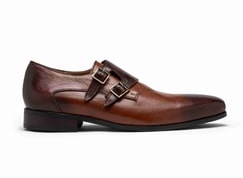
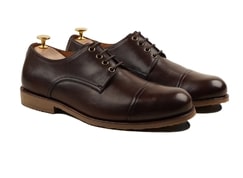
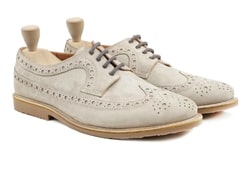
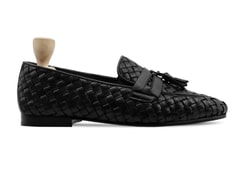
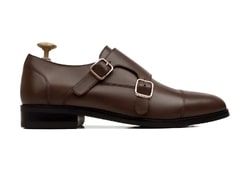
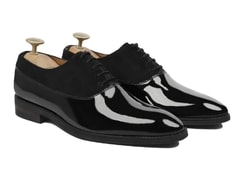
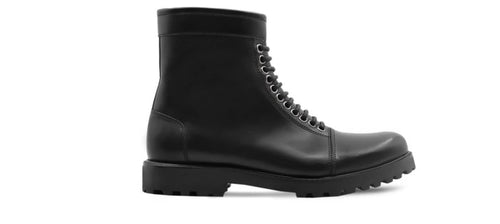
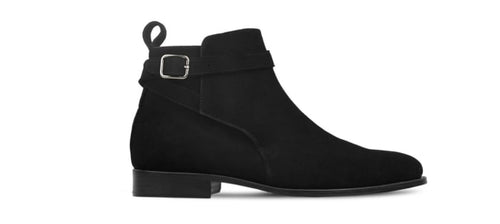


Full-grain leather is more durable, water-resistant, and improves with age, while suede is softer, breaks in faster, and requires different care — choose full-grain if you want one long-lasting shoe with minimal fuss, or suede if you're building texture and variety into a collection that already has smooth leather covered. Here's the real difference between the two, and how to decide which fits your next pair.

Where Each Leather Actually Comes From
Full-grain leather is cut from the top layer of the hide, with the natural grain left completely intact — no sanding, no buffing, no correcting imperfections. This is the strongest, most durable layer of the hide, and it's what most high-quality dress shoes and boots are made from.
Suede comes from the underside of the hide — the inner layer, split away from the top grain. Instead of being finished smooth, it's buffed to create that soft, fuzzy, napped texture suede is known for. Because it comes from a different, thinner layer of the hide, it behaves fundamentally differently from full-grain leather, not just cosmetically.
Full-Grain Leather vs Suede: Quick Comparison
| Feature | Full-Grain Leather | Suede |
|---|---|---|
| Surface | Natural grain, smooth finish | Soft, napped texture |
| Typical feel | More structured at first | Softer and more flexible sooner |
| Water exposure | Generally more forgiving, but not waterproof | More prone to visible water marks without protection |
| Care | Condition and polish as appropriate | Suede brush and protector spray |
| Typical use | Formal, business, long-term staples | Smart-casual, casual, added texture |
| How it ages | Can develop visible patina | Nap changes and marks show more readily |
Important: suede is not automatically low quality, and full-grain leather is not automatically the better shoe. Hide quality, tanning, construction, fit, and finishing still determine how good the finished footwear actually is.
Full-Grain Leather: Key Characteristics
- Smooth, slightly glossy surface that takes a polish well
- Develops a patina over time — the leather deepens and richens in color the more it's worn and cared for. Our guide to hand-painted patina finishes covers a related technique that builds on this same natural aging quality
- Highly durable, resistant to punctures and wear
- More water-resistant than suede, though still not waterproof without treatment
- Ages better with time rather than looking worn out
Best for: formal oxfords, derbies, and monk straps; shoes you want to last for years and improve in appearance as they age; business and formal settings where a polished look matters.
Suede: Key Characteristics
- Soft, matte texture with visible nap (the fuzzy surface)
- Lighter and more flexible than full-grain leather
- Breaks in faster and feels more comfortable sooner
- More vulnerable to water stains and scuffing
- Doesn't take a polish — requires different care entirely (brush and protector spray, not wax polish)
Best for: smart-casual and casual footwear; warmer-weather shoes, since the texture and typically lighter construction suit lighter outfits; anyone who wants texture and visual variety beyond smooth leather.
Durability: Which Actually Lasts Longer?
This is where the comparison gets more nuanced than "one is better."
Full-grain wins for raw durability. The tightly-packed grain structure resists scuffs, punctures, and water better than suede's more delicate napped surface. If you're choosing one shoe to survive years of regular wear in unpredictable conditions, full-grain is the safer bet. For boots specifically, see our full-grain leather boots guide.
Suede isn't fragile, but it needs different care. A well-maintained suede shoe, brushed regularly and protected with the right spray, can last just as long as a full-grain pair — it's just more susceptible to visible damage if neglected. Suede shows stains and water marks more obviously, even if the underlying material isn't actually more likely to fail structurally.
Care Requirements Are Genuinely Different
This is often the deciding factor for people, more than looks:
Full-grain leather care:
- Regular conditioning to prevent drying and cracking
- Polish for shine and light water protection
- Can be cleaned with a damp cloth and mild soap when needed
Suede care:
- A dedicated suede brush to lift the nap and remove surface dirt
- Suede protector spray applied periodically, not leather conditioner, which can ruin suede
- Water stains need to be addressed carefully — never rub aggressively, as it can damage the nap permanently
If you don't want to deal with a second, separate care routine, sticking with full-grain leather across your whole collection simplifies maintenance. If you're exploring color as well as texture, our blue suede shoes guide is a useful example. If you don't mind an extra product or two, suede adds real texture variety without much added effort.
Marcello Sarto examples: For a full-grain option, our Tan Wingtip Lace-Up Boots use hand-painted full-grain leather. For suede, our Elegant Brown Suede Derby Shoes show the softer napped finish in a business-casual derby. Comparing the two is a useful way to see how material changes both texture and the role a shoe plays in a wardrobe.
Which Should You Choose?
Choose full-grain leather if:
- You want one durable shoe that works for years with minimal fuss
- You're building a formal wardrobe and need business-appropriate polish
- You want the leather to visibly improve with age
Choose suede if:
- You want to add texture and visual variety to a shoe collection that's otherwise all smooth leather
- You're shopping for smart-casual rather than strictly formal use
- You like a softer, more immediately comfortable shoe with less break-in time
Honestly, most well-rounded shoe collections eventually include both — full-grain for the formal, long-term staples, suede for texture and casual versatility. That longevity also matters when thinking about more sustainable handmade footwear. Neither is a wrong choice; they're just built for different roles in a wardrobe.
Frequently Asked Questions
Is full-grain leather always better than suede? Not "better," just different — full-grain wins on durability and formality, suede wins on comfort and casual versatility. Neither is objectively superior.
Can suede be waterproofed? Yes, with a dedicated suede protector spray, though it will never be as water-resistant as full-grain leather.
Why does full-grain leather cost more than corrected-grain leather? Full-grain uses the entire natural hide without sanding away imperfections, requiring higher-quality raw material to begin with, unlike corrected leather which can use lower-grade hides that get sanded and re-textured.
Does suede wear out faster than leather? Not necessarily structurally, but it shows visible wear and staining more easily if not properly cared for, which can make it appear to age faster even when the material itself is holding up fine.
Explore both in our collection — smooth full-grain options in our Lace Up and Monk Strap lines, or browse our men's suede Oxford shoes alongside suede textures throughout our Loafers & Slip-Ons collection.
See a featured pair: Elegant Brown Suede Derby Shoes for Men.
Comparing both materials in brown? Browse our brown leather and suede dress shoes to compare finishes, shades and silhouettes in one collection.