
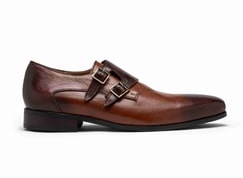
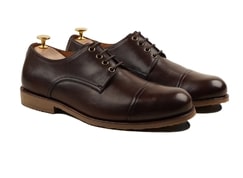
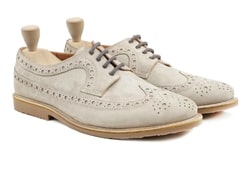
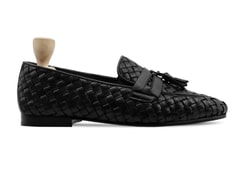
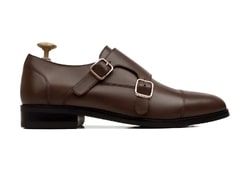
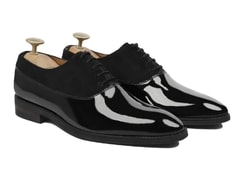
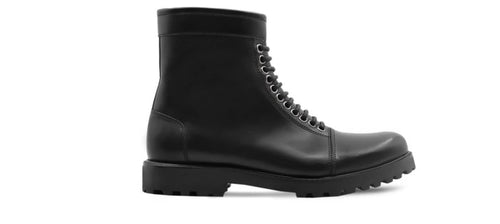
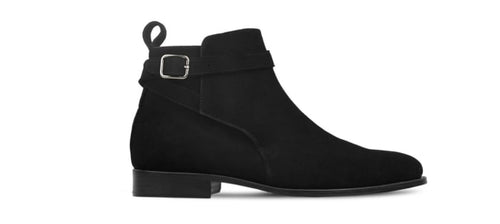


Full grain leather boots usually cost more than boots made from heavily corrected or lower-grade leather. The usual explanation is that full grain is “better leather,” but that does not tell you much when you are actually trying to choose a pair.
What matters is what has — and has not — been done to the hide.
Full grain leather keeps the natural outer surface rather than sanding that surface away to create a completely uniform finish. That means you can often see more variation in the leather, and over time the material tends to develop character instead of simply looking worn.
But there is an important detail that gets lost in marketing: full grain leather alone does not automatically make a good boot.
The hide, tanning, construction, fit and finishing still matter.
So before paying more because a product description says “full grain,” it helps to know what you are actually buying.
Full Grain Refers to the Surface of the Leather
Leather starts as animal hide. Different leather types are created partly by how much of the original surface is preserved and how the hide is finished.
With full grain leather, the natural grain layer remains largely intact.
Small variations in texture may still be visible. One section may look slightly different from another. Under the right finish, you might even notice subtle marks that remind you this was once a natural material rather than something manufactured to be perfectly identical.
That is not necessarily a defect.
In fact, an unnaturally perfect surface can sometimes tell you that the leather has been heavily corrected and coated to hide what was underneath.
This does not mean every visible mark is desirable. Good shoemaking still depends on selecting and cutting the leather carefully.
The point is simply that natural variation and poor quality are not the same thing.
Why Does Full Grain Leather Age Differently?
One reason people like full grain leather is what happens after the first few months of wear.
A good pair rarely stays exactly the same.
Areas that flex become softer. The color can gain more depth. Polishing, handling and normal wear gradually create small differences across the surface.
This change is often described as patina.
Patina is not just another word for damage.
Scuffs, deep scratches and neglected leather are still damage. Patina is the more gradual character that develops when quality leather is worn and cared for over time.
This is especially noticeable on brown, tan and hand-finished boots, where slight changes in tone can make the leather more interesting instead of making it look tired.
That is part of the appeal of a product such as Marcello Sarto's Tan Wingtip Lace-Up Boots for Men, which uses hand-painted full-grain leather. The color and wingtip detailing already create variation, so the boot is not trying to look completely flat or industrially uniform.

Full Grain Does Not Mean Indestructible
There is a strange assumption that expensive leather should be difficult to damage.
That is not really how leather works.
Full grain leather is durable, but it is still leather. Water, salt, excessive heat and long periods without basic maintenance can all shorten its life.
A strong material simply gives you a better foundation.
You still need to look after it.
That usually means brushing dirt away, allowing damp boots to dry naturally, conditioning when the leather genuinely starts to feel dry and giving the boots some rest between heavy wears.
Too much care can be almost as unnecessary as too little.
Leather does not need to be saturated with conditioner every week. Over-conditioning can leave it overly soft, greasy or darkened.
The goal is to maintain the material, not constantly interfere with it.
The Phrase “Genuine Leather” Tells You Less Than You Think
This is where shopping online becomes confusing.
A product can technically be described as leather without telling you very much about how the leather has been processed.
“Genuine leather” confirms that leather is involved. It does not automatically tell you where that leather sits on a quality scale.
That is why more specific information is useful.
If a seller tells you the leather is full grain, suede, calfskin or another identifiable leather type, you have more to evaluate than you would from the word “leather” alone.
You can then ask a better question: Is that material appropriate for the boot I want?
For example, full grain smooth leather and suede can both be excellent materials, but they create very different shoes. We explain that difference in more detail in our guide to full-grain leather vs suede leather.
A Full Grain Boot Can Still Be Poorly Made
This is probably the most important point in the entire article.
Imagine buying an excellent piece of leather and then building a badly shaped, uncomfortable boot from it.
The leather does not rescue the boot.
When assessing a pair, look beyond the material description and consider the boot as a complete object.
The stitching should look controlled. Panels should meet cleanly. The shape should suit your foot and wardrobe. The sole should make sense for how you plan to wear it.
Construction matters too.
A beautifully finished upper attached poorly to the sole is still a poorly made shoe.
If you are comparing construction methods, our Goodyear welt vs Blake stitch guide explains why the way a shoe is assembled matters alongside the leather itself.
Look at the Boot Before You Look at the Label
When shopping online, marketing terminology can become distracting.
The photographs often tell you things the headline does not.

Zoom in on the leather.
Does the surface have depth, or does it look like a thick plastic coating is sitting on top of it? Can you see subtle natural texture? Does the finish look intentional across different panels?
Then look at the shape.
A full grain leather dress boot should still have the proportions of a dress boot. A rugged boot should not pretend to be sleek simply because premium leather was used.
Material and design have to work together.
This is why the term full grain leather boots covers a much wider category than many buyers initially expect. The same leather quality can appear in a polished lace-up boot, a Chelsea boot or something much more rugged.
Smooth Full Grain Leather Is Not Always the Right Choice
There are occasions where suede may actually make more sense.
If most of your wardrobe is casual, you may prefer the softer visual texture of suede.
If you regularly wear suits or tailored trousers, smooth leather may integrate more naturally.
If you want one boot that can move between both worlds, color and shape begin to matter almost as much as the material.
Dark brown is particularly flexible.
Black usually feels sharper.
Tan and hand-painted finishes show more personality.
Once again, there is no universal “best leather.” There is only a better choice for a particular job.
What Happens During Break-In?
Quality leather can feel structured when new.
That is normal up to a point.
As the boot is worn, flex points begin to form around the natural movement of your foot. The leather gradually becomes more familiar with that movement.
But break-in should never be used as an excuse for a fundamentally bad fit.
A boot that pinches aggressively, crushes your toes or slips excessively at the heel is unlikely to transform into the perfect size after a few weeks.
The material may soften.
Your foot size will not change.
For lace-up styles in particular, our men’s lace up boots guide goes deeper into fit, shape and choosing a pair you will realistically wear.
When Is Full Grain Leather Worth Paying More For?
It makes the most sense when you intend to keep the boots.
That sounds obvious, but it changes the buying decision.
If you are chasing a short-lived trend that you expect to wear a handful of times, paying more for leather designed to improve with age may not give you much benefit.
If you are buying a classic boot that could stay in your wardrobe for years, material quality becomes far more important.
This is also where timeless colors and shapes earn their value.
A good brown lace-up boot does not need to be fashionable for one particular season. It simply needs to continue working with the clothes you already wear.
That long-term perspective is where better leather starts making more sense.

Do Not Buy the Leather and Forget the Boot
It is easy to become obsessed with terms such as full grain, top grain, patina and tanning.
They matter.
But none of them should make the decision for you.
A boot still needs to fit properly, suit your wardrobe and be built for the kind of wear you expect from it.
Full grain leather gives a shoemaker a strong material to work with. When the design and construction are equally considered, the result can age beautifully instead of simply becoming old.
But the phrase on the product page should be the beginning of your evaluation, not the end of it.
If you want to compare different boot shapes and finishes, browse the Marcello Sarto Men’s Ankle Boots collection.