


How to lace dress shoes depends on the shoe's construction and the look you want. Straight-bar lacing creates a clean, formal front that suits many Oxfords, while criss-cross lacing is practical, secure and often looks natural on Derbies. The method matters, but so do three smaller details: whether the eyelet count is even or odd, how tightly you pull the quarters together, and whether the lace thickness matches the shoe.
If you have ever relaced a pair and thought the result looked oddly busy, the problem may not be the shoes at all. Dress shoes have fewer visible details than sneakers, so every diagonal, knot and loose lace stands out more. This guide shows two reliable methods, explains when each one makes sense, and gives you a simple way to judge whether the finished lacing is actually helping the shoe fit.
Start by Looking at the Shoe, Not the Lace
Before removing anything, check how the shoe is built. An Oxford has a closed-lacing structure: the eyelet tabs sit beneath the vamp and are designed to draw together neatly. A Derby uses open lacing, so the eyelet pieces sit on top of the vamp and can spread more freely.
That construction difference affects both appearance and fit. Straight bars can emphasize the clean front of an Oxford. Criss-cross lacing can suit a Derby because the open quarters already create more visible structure. Neither method is compulsory, though. A good result is the one that looks balanced and lets you tighten the shoe without forcing the upper out of shape.
If you want a refresher on the construction difference before relacing, see our Oxford vs Derby vs Monk Strap guide. For a closer look at formal Oxford details, our men's Oxford dress shoes guide explains how the closed lacing system changes the silhouette.
Method 1: Straight-Bar Lacing for a Cleaner Front
Straight-bar lacing shows horizontal bars across the tongue with most of the vertical movement hidden inside the shoe. It is popular on formal dress shoes because it reduces visible diagonals and keeps the front orderly.
This method is easiest on shoes with an even number of eyelet pairs. It can also be adapted to odd counts, but one internal diagonal or a slightly different routing may be needed. Do not force the pattern if it creates awkward tension.
How to Straight-Bar Lace Dress Shoes
- Remove the old laces and flatten the tongue.
- Feed both lace ends through the lowest pair of eyelets from the outside toward the inside, creating the first horizontal bar.
- Take one lace up on the inside to the next empty eyelet on the same side, bring it out, then run it straight across the shoe and back in through the opposite eyelet.
- Take the other lace farther up on the inside to the next appropriate empty row, bring it out and run it horizontally across.
- Continue alternating the two lace ends upward so each visible section forms a straight bar.
- At the top, adjust the hidden sections so the lace lengths are reasonably even before tying.
The exact hidden routing depends on how many eyelet pairs your shoes have. What matters visually is simple: the sections you can see from above should run horizontally rather than diagonally.

The Marcello Sarto Black Leather Oxford Shoes above are useful for seeing how compact the eyelet area can be on a closed-lacing shoe. The photograph is a product image rather than a step-by-step lacing diagram, so use it to compare shoe structure rather than as an exact routing template.
Method 2: Criss-Cross Lacing for Easy Adjustment
Criss-cross is the familiar method where the laces form repeated X shapes. On dress shoes, it is less visually minimal than straight-bar lacing, but it is easy to tighten, easy to remember and works well with many Derby shoes.
How to Criss-Cross Lace Dress Shoes
- Thread the lace through the bottom pair of eyelets and center it so both ends are roughly equal.
- Cross the two ends over the tongue.
- Feed each end through the next eyelet on the opposite side.
- Cross again and repeat until you reach the top pair.
- Before tying, work from the bottom upward to even out the tension rather than pulling only at the top.
The last step matters. If the lower rows are loose and you pull hard only on the top eyelets, the shoe may look pinched near the ankle while still feeling loose farther down.

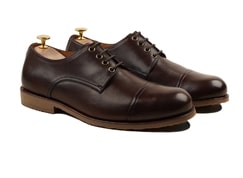
The Black Smooth Leather Derby Shoes show the open-lacing structure clearly. If you are comparing several shapes, you can also browse the men's Derby collection.
Straight Bar or Criss-Cross: Which Looks Better?
For a sleek black Oxford worn with formal tailoring, straight-bar lacing is usually the cleaner visual choice. The horizontal lines echo the controlled shape of the shoe and keep attention away from the laces.
For a Derby, especially one in suede or a less formal color, criss-cross can feel entirely natural. The shoe already has a more open construction, so diagonal laces do not necessarily look busy.
A practical way to decide is to take one phone photo from standing height after trying each method. The difference is easier to judge in a full outfit than from a few inches away. If the lacing becomes the first thing you notice, it may be too visually active for the shoe.
What Changes With 4-Eyelet and 5-Eyelet Dress Shoes?
Searches for how to lace dress shoes with 4 eyelets or 5 eyelets often assume there is one special method for each count. The real issue is whether the chosen pattern divides cleanly across the available rows.
Four eyelet pairs: Straight-bar lacing is straightforward because the even number makes it easy to alternate the hidden vertical runs. Criss-cross also works without complication.
Five eyelet pairs: Criss-cross remains simple. Straight-bar lacing may require a modified hidden route so that both lace ends finish in sensible positions near the top. That is normal; do not create excessive internal bunching just to preserve a perfectly symmetrical hidden path.
If your shoe has unusual eyelet spacing, prioritize even tension over copying a diagram designed for a different shape.
Do Not Over-Tighten an Oxford
One common mistake is treating the lace like a tool for forcing the quarters completely shut. On an Oxford, the two sides may come close together when the shoe fits well, but whether they fully meet depends on the shoe last, your instep and the intended fit.
Pulling aggressively can distort the upper without solving a sizing problem. Tighten from the lower rows upward, stop when the shoe feels secure, then walk around. If your foot is sliding, pinching or going numb, relacing alone may not be the answer.
Our dress shoe fit guide explains heel movement, toe room, width and instep pressure in more detail.
Choose Thin Laces for Most Dress Shoes
Dress shoes generally look best with relatively slim laces that fit the scale of the eyelets. Thick sneaker-style cords can overwhelm a narrow Oxford and may not sit neatly inside smaller eyelets.
Waxed laces can create a crisp appearance and may hold a knot neatly, while unwaxed cotton laces can look softer. The right choice depends on the shoe. What matters most is that the lace passes through the eyelets without abrasion or excessive resistance.
Color is usually simple. Black laces with black formal shoes are the least distracting. Brown shoes commonly use brown laces close to the leather or suede tone. Contrast laces can work, but they immediately make the lacing more noticeable.
Suede Changes the Mood, Not the Basic Mechanics
A suede Derby does not need a different lacing physics lesson. The same eyelets and tension principles apply. What changes is the visual character: suede is softer and more textured, so a relaxed criss-cross pattern can suit it well.

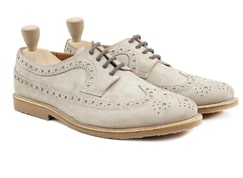
See the Elegant Brown Suede Derby Shoes for a practical example. If you own suede footwear, remember that ordinary smooth-leather polish is not appropriate for the nap; our guide to protecting suede shoes covers the material-specific care instead.
Three Lacing Mistakes That Make Good Shoes Look Messy
1. Uneven Lace Lengths
If one end is much longer than the other, the knot will sit off-center and you may compensate by tightening one side harder. Center the lace before you start, then make small adjustments as you move upward.
2. Twisted Laces
Flat dress-shoe laces can rotate as they pass through the eyelets. Straighten each visible section before tightening. A bar that lies flat looks cleaner than one with a half twist.
3. Pulling Only at the Top
Work the tension upward row by row. This spreads pressure more evenly and helps the shoe hold the foot without creating a single tight point near the ankle.
A 60-Second Relacing Check
After you finish, stand up rather than judging the result while the shoe is in your hand. Check four things:
- Are the visible bars or crosses consistent from bottom to top?
- Are both lace ends long enough to tie without huge loops?
- Does the tongue stay centered?
- Can you walk comfortably without needing to pull the top row excessively tight?
If all four are right, you are finished. There is no prize for making the hidden routing mathematically perfect if the visible result is clean and the shoe fits properly.
Frequently Asked Questions
What is the best way to lace dress shoes?
Straight-bar lacing is a clean choice for many formal Oxfords, while criss-cross lacing is simple, secure and well suited to many Derbies. Choose according to the shoe's structure, the occasion and the fit you get after tightening.
Should Oxford shoes be straight-bar laced?
They do not have to be, but straight bars complement the Oxford's closed-lacing construction and formal appearance. Criss-cross can still function, though it creates more visible diagonal lines.
Can I criss-cross lace dress shoes?
Yes. Criss-cross is a practical method for dress shoes and is especially natural on open-laced Derbies. Keep the lace thin enough for the shoe and make sure each visible section lies flat.
How do I lace dress shoes with 4 eyelets?
Four eyelet pairs work well with either straight-bar or criss-cross lacing. For straight bars, alternate the hidden internal rises and visible horizontal sections until all four rows are filled.
How do I lace dress shoes with 5 eyelets?
Criss-cross works normally. Straight-bar lacing can also work, but odd eyelet counts may require a modified hidden route or one concealed diagonal so both ends finish near the top.
How tight should dress-shoe laces be?
Tight enough to hold the foot securely, but not so tight that the upper is distorted or your instep feels painful. Adjust tension from the bottom upward rather than pulling hard only on the last row.
The Cleanest Lacing Is the One You Stop Noticing
Good dress-shoe lacing should support the fit and then disappear into the overall design. Straight bars keep an Oxford looking controlled. Criss-cross makes a Derby easy to adjust. Thin, untwisted laces and even tension matter more than trying to copy a complicated pattern that does not suit your particular shoe.
Relace one pair carefully, take a step back and look at the entire shoe. If the silhouette looks balanced and your foot feels secure, the laces are doing exactly what they should.