


How to measure shoe width at home starts with one simple rule: measure the widest part of each foot while you are standing, then use the larger measurement as your reference. A ruler, a sheet of paper and a pencil are enough. The important part is not just getting a number—it is understanding that shoe-width labels such as D, E or EE are not perfectly universal across brands, lasts or countries.
That distinction matters when buying dress shoes online. Two men can wear the same length size and still need very different amounts of room across the ball of the foot. One can have a narrow forefoot and high instep; the other can have a broad forefoot and low instep. Width is one part of fit, not a substitute for checking the whole shoe.
What You Need to Measure Shoe Width at Home
You do not need specialist equipment for a useful first measurement. Gather:
- Two sheets of paper large enough for your feet
- A sharpened pencil or fine pen
- A ruler or tape measure marked in millimeters or fractions of an inch
- The type of socks you normally wear with the shoes you plan to buy
- A flat, hard floor
Measure later in the day if possible. Feet can spread slightly after hours of standing and walking, so an evening measurement may better reflect the fit you need during a full day of wear.
How to Measure Shoe Width Step by Step
1. Put the Paper on a Hard Floor
Place the paper on a flat surface. Avoid thick carpet because it can let the paper move or allow the pencil to angle under the foot.
2. Stand With Your Full Weight on the Foot
Do not measure while sitting. When you stand, the foot bears weight and naturally spreads. That is the condition you want to reproduce when checking width for real-world wear.
3. Trace the Foot With the Pencil Upright
Keep the pencil as vertical as possible and trace closely around the foot. If you angle the pencil outward, the outline becomes artificially wide; angle it inward and the trace can become too narrow.
4. Mark the Widest Part of the Forefoot
Look for the widest points around the ball of the foot, generally near the base of the big toe and the base of the little toe. Draw a straight line across those two points and measure it.
5. Measure Both Feet
Repeat the process on the other foot. Small differences between feet are common. When choosing shoes, use the larger foot as your starting point rather than averaging the two.
6. Record Length as Well as Width
A width number without shoe length is incomplete. A foot that measures the same width at size 8 and size 12 does not necessarily correspond to the same width category. Record heel-to-longest-toe length at the same time, then compare both measurements with the specific brand’s sizing information.
| Measurement | How to take it | Why it matters |
|---|---|---|
| Foot length | Heel to longest toe | Sets the starting shoe size |
| Ball width | Across the widest part of the forefoot | Helps identify whether standard width is likely to feel narrow or roomy |
| Both feet | Measure left and right separately | Lets you fit the larger foot rather than the smaller one |
| Sock thickness | Measure in your usual dress socks | Keeps the test closer to how the shoes will actually be worn |
Marcello Sarto’s own shoe size guide also recommends measuring both feet while standing and using the larger foot for sizing. It notes that Marcello Sarto shoes use a Standard Universal Width and advises customers with unusually wide or narrow feet to contact the store with their measurements before ordering.
What Do D, E and EE Shoe Widths Mean?
In men’s footwear, letter labels are commonly used to describe width. D is often treated as a standard or medium men’s width, while E and EE are commonly used for wider fittings. Narrower labels may use B or C. But these labels should be treated as brand-specific guidance rather than a universal measuring system.
A D width from one maker can feel different from a D width from another because the last—the three-dimensional form around which the shoe is built—can differ in forefoot shape, instep height, heel width and toe shape.
That is why a raw foot-width measurement should not be converted to a letter by using a random chart from another brand. Use the chart supplied by the shoe maker whenever possible.
Why Width Changes With Shoe Size
Width is not independent of length. Shoe lasts generally scale in more than one direction as size changes. That means a foot width that looks “wide” at one length may be closer to standard at another.
This is also why a single statement such as “my foot is 4 inches wide” is not enough to identify the correct shoe. A useful fit description includes length, width, the shape of the forefoot and any pressure through the instep.
For a broader overview of length sizing, see How to Choose the Right Shoe Size When Buying Online.
Use the Widest Part of Your Foot, Not the Widest Part of the Outline
A traced outline can sometimes flare around the toes, especially if the pencil moves away from the foot. The measurement you want for width is usually the ball of the foot—the broad load-bearing area behind the toes—not the span from the tip of the big toe to the outside edge of the little toe.
If your outline looks unusually broad at the front, feel for the prominent joints at the base of the big and little toes and use those as the reference points.

The Marcello Sarto Black Leather Oxford Shoes above are shown as an example of Oxford construction. The image does not indicate a special width fitting; use product measurements and the store’s sizing guidance rather than judging width from appearance alone. You can also browse the Oxford and wingtip collection.
Foot Width and Instep Height Are Not the Same Thing
A person can have a relatively narrow forefoot and a high instep, or a broad forefoot and a low instep. Both may describe a shoe as “tight,” but for different reasons.
If the sides of the forefoot feel squeezed, width may be the problem. If pressure is concentrated across the top of the foot under the laces, instep volume may be the issue. If the heel lifts while the forefoot feels comfortable, the shoe may simply have too much volume at the back.
This is one reason width letters cannot tell the whole story. After you measure, you still need to check how the shoe behaves on your foot.
What the Laces Can Tell You About Width
Laces are useful visual clues, but not a diagnostic tool by themselves. On an Oxford, the eyelet tabs may sit closer together or farther apart depending on instep volume and the shoe last. On a Derby, the open quarters can spread more freely.
If you need extreme lace tension just to keep the shoe secure, or the upper is pulling sharply across the widest part of the foot, revisit the size and fit rather than assuming the leather simply needs to stretch.

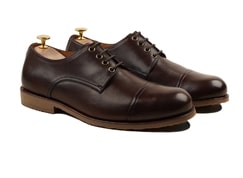
The Black Smooth Leather Derby Shoes provide a clear example of open lacing. If you are comparing shapes, browse the men’s Derby collection as well.
How to Tell If a Dress Shoe Is Too Narrow
A measurement gives you a starting point; wearing the shoe gives you the real answer. Signs that a dress shoe may be too narrow include:
- Strong pressure across the ball of the foot
- The little toe feeling compressed against the side
- Numbness, burning or sharp pressure after a short period
- The upper bulging dramatically over the edge of the sole
- Needing to size up in length only to gain enough side-to-side room
Some firmness in a new leather shoe is normal, but pain is not a fit strategy. Leather can soften with wear; it should not be expected to transform a clearly incorrect width into the right one.
For a complete post-purchase check, see How Should Dress Shoes Fit?.
How to Tell If a Dress Shoe Is Too Wide
Too much width can be just as distracting as too little. Watch for lateral movement, the foot sliding inside the shoe, excessive creasing caused by excess volume, or the need to tighten the laces dramatically to feel secure.
Heel slip can sometimes be caused by excess overall volume, but it can also come from last shape or a stiff new sole. Look at the whole fit rather than using one symptom alone.
Loafers are especially sensitive because there are no laces to compensate for excess volume. If you are measuring width for slip-ons, our loafer fit guide is worth checking separately.
Should You Measure Barefoot or With Socks?
Measure with the socks you normally plan to wear with the shoes. Thin dress socks will have less effect than heavy boot socks, but consistency matters. If you are comparing measurements from different days, use the same sock type and similar conditions.
For formal Oxfords or Derbies, thin dress socks are usually the most useful reference. For boots you plan to wear with thicker socks, measure accordingly.
Do Not Choose a Longer Shoe Just to Get More Width
This is one of the most common fit mistakes. If a shoe feels narrow, moving up a full length size can create extra space, but it can also shift the flex point, add heel movement and leave too much room in front of the toes.
Length and width should be solved as separate fit questions whenever the brand offers enough information to do so. If only one standard width is available, contact the seller before ordering when your measurements fall well outside your usual fit.
Our guide to buying men’s dress shoes online covers the other checks worth making before checkout.
Smooth Leather and Suede Can Feel Different, but Width Still Matters
Material changes the feel of a shoe, but it does not cancel a width mismatch. Suede can feel softer than structured smooth leather, yet a shoe that is genuinely too narrow across the ball of the foot can still be uncomfortable.

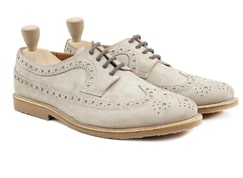
The Elegant Brown Suede Derby Shoes show how the same open-lacing category can look very different in a softer material. Do not assume visual softness means extra width.
A Simple Width-Measurement Routine Before Ordering
- Measure both feet while standing.
- Record heel-to-toe length and ball width.
- Use the larger foot as your reference.
- Compare the result with the specific brand’s chart or fit guidance.
- Check whether the shoe is offered in multiple widths or one standard width.
- If your foot is unusually wide or narrow, ask the seller before ordering rather than guessing.
This routine takes only a few minutes and gives you far more useful information than relying on your usual size from another brand.
Frequently Asked Questions
Where exactly do I measure foot width?
Measure across the widest part of the ball of the foot, generally between the prominent joints at the base of the big toe and little toe. Measure while standing with full weight on the foot.
Is D a standard men’s shoe width?
D is commonly used as a standard or medium men’s width in U.S. sizing, but width labels are not perfectly universal. Always check the specific brand’s sizing system before converting your measurement to a letter.
What is the difference between wide and extra wide shoes?
Wide and extra-wide labels represent progressively more room across the shoe, but the exact dimensions vary by brand, size and last. One company may use E for wide while another uses EE or a descriptive label instead.
Should I measure both feet?
Yes. Measure both and use the larger foot for sizing. Small left-right differences are common and fitting the smaller foot can leave the larger one cramped.
Can leather shoes stretch if they are too narrow?
Leather can soften and give slightly with wear, but you should not rely on break-in to correct significant width pressure. A shoe that causes pain, numbness or strong compression is a fit problem, not a normal break-in requirement.
Does shoe width change when shoe size changes?
Yes. Width measurements are interpreted together with length because shoe lasts scale as size changes. That is why a single foot-width number should not be converted to a width letter without also considering shoe size and the brand’s own chart.
The Number Is Only the Starting Point
Measuring shoe width at home is useful because it replaces guesswork with a repeatable reference. But the goal is not to chase a perfect letter on a chart. Record your length and ball width, compare them with the specific maker’s sizing guidance, and then judge how the shoe holds the heel, instep, forefoot and toes together.
For Marcello Sarto, start with the official size guide. If your feet are unusually wide or narrow, the guide recommends contacting the store with your exact measurements before ordering.