


Full grain leather dress shoes are often sold as the premium option, but the label only tells you one part of the story. It describes the layer of hide used for the upper; it does not automatically tell you whether the shoe fits well, whether the construction is good, or whether the finishing suits formal wear.
That is why the useful question is not simply “Is this full grain?” It is “What does the leather look like, how has it been finished, and does the rest of the shoe justify the price?”
For dress shoes, that matters even more because the leather has to do two jobs at once: look refined now and still develop well after regular wear.
Full Grain Does Not Mean Perfectly Smooth
Full grain leather keeps the outer surface of the hide rather than sanding that surface away to create a completely uniform face. Because of that, the grain can show natural variation.
That does not mean every mark is desirable, and it does not mean a rough-looking shoe is automatically “more authentic.” Good dress-shoe leather should still look intentionally selected and finished.
The useful thing to look for is character without chaos: subtle grain, depth in the finish, and a surface that does not look like plastic coating has hidden everything underneath.
The Finish Matters Almost as Much as the Leather
Two full grain shoes can look completely different because finishing changes how the surface reflects light and how much natural variation remains visible.
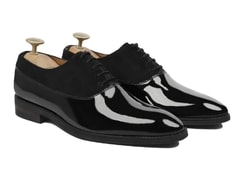
A smooth black dress shoe may be finished for consistency and polish. A hand-painted brown shoe may show more tonal movement. Neither approach is automatically better.
For formal wear, consistency often matters more than drama. For a shoe you want to wear with navy trousers, grey tailoring, and smart-casual clothing, some variation in the leather can make the pair more interesting.
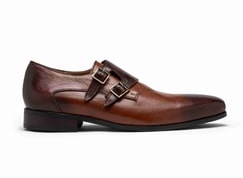
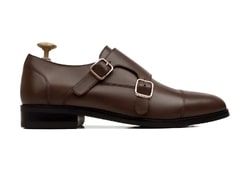
Marcello Sarto's Brown Double Monk Strap Shoes for Men use hand-painted full-grain leather, so the finish is part of the design rather than something separate from the material.

Creasing Is Normal — Bad Fit Is Not
One of the biggest misunderstandings about quality leather is the idea that premium shoes should never crease.
Leather bends when your foot bends. A dress shoe that never forms any creases would be behaving more like a rigid shell than footwear.
What matters is where the shoe flexes and how the creasing develops.
If the fit is right, the main flex should usually happen around the ball of the foot. If the shoe is too long or too loose, you may see deeper or more awkward creasing in places the shoe was not designed to bend.
So when evaluating full grain leather, do not judge the material by the existence of creases alone. Fit has a major influence on what those creases look like over time.
Good Leather Changes Instead of Staying Frozen
The reason many buyers like full grain leather is that the surface can develop with wear rather than staying visually identical to day one.
Polishing, brushing, moisture, movement, and normal contact all affect the finish gradually. Brown leather may gain darker areas and more tonal depth. Black leather may develop a richer shine where it is brushed regularly.
This is often described as patina, but not every change is desirable. Deep scratches, neglected dryness, salt marks, and water damage are still damage.
The goal is controlled ageing, not simply “old-looking leather.”
If you like visible color variation, our guide to hand-painted patina leather shoes explains how intentional finishing differs from wear that develops later.
Color Changes How Full Grain Leather Reads
Black and brown full grain leather can communicate very different things even when the underlying material quality is similar.
Black hides much of the natural color variation. That makes it useful when the goal is a clean, formal appearance.
Brown shows more of the finishing work and often makes grain variation easier to see. Tan and lighter browns can show even more tonal contrast.
This is why a two-tone pair such as the Tan & Brown Double Monk Strap Shoes for Men can look more expressive than a single-color black dress shoe even though both belong in the same broad formal category.

Choose the color for the wardrobe first. Let the leather finish support that decision rather than making the finish itself the only reason to buy.
Full Grain Is Not a Substitute for Good Construction
A strong upper cannot rescue a badly built shoe.
You still need to look at the lining, insole, outsole, stitching, heel, and overall construction. A shoe can use excellent leather and still be uncomfortable or difficult to repair if the rest of the build is weak.
This is also why comparing dress shoes only by leather type can be misleading.
If the product page tells you the construction method, use that information. Our Goodyear welt vs Blake stitch guide explains how those two common methods differ in structure and feel.
The Sole Still Has to Match Your Real Life
Full grain uppers often get all the attention, while the sole is treated like a footnote.
For everyday use, that is backwards.
If you walk on polished indoor floors and mainly wear the shoe for formal occasions, a traditional leather sole may suit you well. If your routine includes wet pavements, longer walks, or mixed surfaces, extra grip becomes more useful.
The Brown Double Monk Strap pair above, for example, combines an Argentinean leather sole with a rubber protector, which keeps the traditional look while adding traction.
For a deeper comparison, see our leather sole dress shoes guide.

Care Should Be Light and Regular, Not Aggressive
Full grain leather does not need constant heavy treatment.
After wear, brush away surface dust and let the shoes rest. Use shoe trees if they suit the shape of the pair. Condition occasionally when the leather begins to feel dry, and use polish when you want to restore shine or color.
More product is not always better. Overloading leather with conditioner or wax can change the finish and build up on the surface.
For a new pair, the break-in period also deserves patience. Our guide to breaking in new leather shoes without damaging them explains why forcing the process usually creates more problems than it solves.
When Paying More for Full Grain Makes Sense
It makes the most sense when the rest of the shoe is also well considered.
If the fit works, the construction is solid, the lining and sole suit your needs, and the finish matches the way you dress, full grain leather can be a meaningful part of the value.
It is especially appealing if you plan to keep the shoes for years and are comfortable with leather that develops character instead of staying visually unchanged.
But if the shoe is uncomfortable, poorly proportioned, or wrong for your wardrobe, the words “full grain” on the product page will not make it a good purchase.
What to Check Before You Buy
When you are looking at full grain leather dress shoes, check the whole shoe rather than treating the leather label as a final verdict.
- Look at several photos of the upper, not just the hero image.
- Check whether the finish is smooth, patinated, embossed, or heavily coated.
- Read what the lining and sole are made from.
- Check the construction method when it is provided.
- Make sure the shape and color fit the clothes you already wear.
- Use the size guidance instead of assuming every dress shoe fits the same.
If you are still comparing materials and styles more broadly, our men’s leather dress shoes guide covers the bigger buying decision, while the full grain vs suede guide focuses specifically on how those two materials differ.
You can also browse Marcello Sarto's Men’s Monk Strap Shoes and Men’s Oxford Shoes & Wingtips to compare how different dress-shoe designs use leather in different ways.